SEO for clothing websites is the work of helping fashion brands or apparel brand teams rank for the specific style, material, fit, and seasonal queries that drive shoppers from discovery to checkout. Fashion ecommerce sits in a different spot from generic retail because of how the fashion industry actually operates. Fashion brands' catalogs turn over with every season, churning search results and search engines indexes as they go, the buyer evaluates products visually before they ever read a line of copy, and the keyword space for fashion brands is wider and more descriptive than almost any other vertical because shoppers describe products with combinations of color, fabric, fit, occasion, and trend.
This seo for fashion brands and clothing websites guide pulls together the practice areas that actually move the needle in 2026: fashion keyword research with relevant keywords, on page seo and product copy, site structure with faceted navigation, content marketing for trend authority, visual content and image optimization, user generated content, technical seo foundations, and multi-channel discovery through Amazon, Walmart, Pinterest, and Instagram.
Then we’ll take a look at how to automate the per-product piece of search engine optimization with Pumice using two complementary tools: the Merchandising Pipeline for catalog-wide enrichment and the Product Page Optimization Playbook for focused per-SKU SEO passes.
Clothing website SEO stack: fashion keyword research, on-page rewrites, site taxonomy with faceted navigation, content marketing and lookbooks, image and video SEO, UGC galleries, technical foundation with Core Web Vitals, multi-channel discovery (Pinterest, Instagram, Google), and the Pumice Merchandising Pipeline plus Product Page Optimization Playbook for per-SKU and full-catalog work.
Key Takeaways
Before the deep dive, this is what the rest of the guide will hand you:
SEO for clothing websites and seo for fashion brands comes down to one thing: get more fashion buyers to product pages with visually rich, complete content that converts as well as it ranks.
Long descriptive keywords like "sustainable linen midi dress navy" and "unisex streetwear hoodie" win over generic head terms like "dresses" or "hoodie."
Duplicate content across color and size variants is the single biggest technical seo problem in fashion ecommerce. Canonical tags and unique product descriptions fix it.
Seasonal inventory turnover demands a 301 redirect strategy for out-of-stock SKUs so the brand never loses ranking authority when a collection sells through.
On-page product page SEO is the highest-priority lever for clothing websites. Unique descriptions, comprehensive material and fit detail, target keywords in titles and headings, schema, and image SEO are where the rankings and conversions actually happen. Visual content supports that lever, but it does not replace it.
Pumice automates the per-product piece of fashion brands seo at catalog scale: the Merchandising Pipeline enriches sparse manufacturer feeds for fashion brands, and the Product Page Optimization Playbook turns flagship SKUs into search engines search results winners.
Why SEO for Clothing Websites Is Different in 2026
There are a few key levers in fashion SEO that we can pull to improve the discovery to purchase pipeline considering how buyers actually search and purchase.
On-Page Product Page SEO Is the Highest-Priority Lever
On-page product page SEO is where clothing brands win or lose in the SERP. The product page is the URL the search engines rank, the asset shoppers convert on, and the lever every other practice (keyword research, content marketing, link building, technical foundations) ultimately points back to. A clothing brand that gets product page SEO right unlocks more value than any other single investment, which is why the rest of this guide treats unique product descriptions, comprehensive material and fit detail, strong visual content, target keywords in titles and headings, structured data, and image SEO as the priority deliverables for any seo strategy.
The Seasonal Inventory Turnover Problem
Fashion brands turn over fashion ecommerce inventory every season, often in waves. Limited editions, capsule collections, and trend pieces frequently sell through and never come back. Deleting those SKU pages creates 404 errors and broken links that fragment ranking authority, waste crawl budget, and create more broken links from inbound editorial. The fix is a 301 redirect strategy: point retired SKUs at the parent category, a similar in-stock product, or a curated New Arrivals page so the link equity stays in the brand.
Fashion Industry Keyword Research for Clothing Buyers
Keyword research is the foundation of seo for fashion brands and clothing website SEO because it connects how shoppers describe what they want to the PDPs you actually publish. Fashion brands' buyers and potential customers search with combinations of style, material, fit, color, occasion, and season. The keyword universe is unusually wide and unusually descriptive, which suits brands that build out comprehensive product copy.
Intent-Driven Keyword Selection by Brand Positioning
Fashion seo ideas and the fashion seo strategy diverges sharply by brand positioning. Fast fashion brands' seo strategy targets high-volume, trend-specific keywords aimed at a younger value-conscious target market. Luxury and heritage fashion brands prioritize long tail keywords focused on exclusivity, quality, and craftsmanship. Both require the same technical foundation. The strategic focus diverges according to audience expectations, product lifecycle, and brand identity.
Long-Tail Descriptive Queries for Style, Material, and Fit
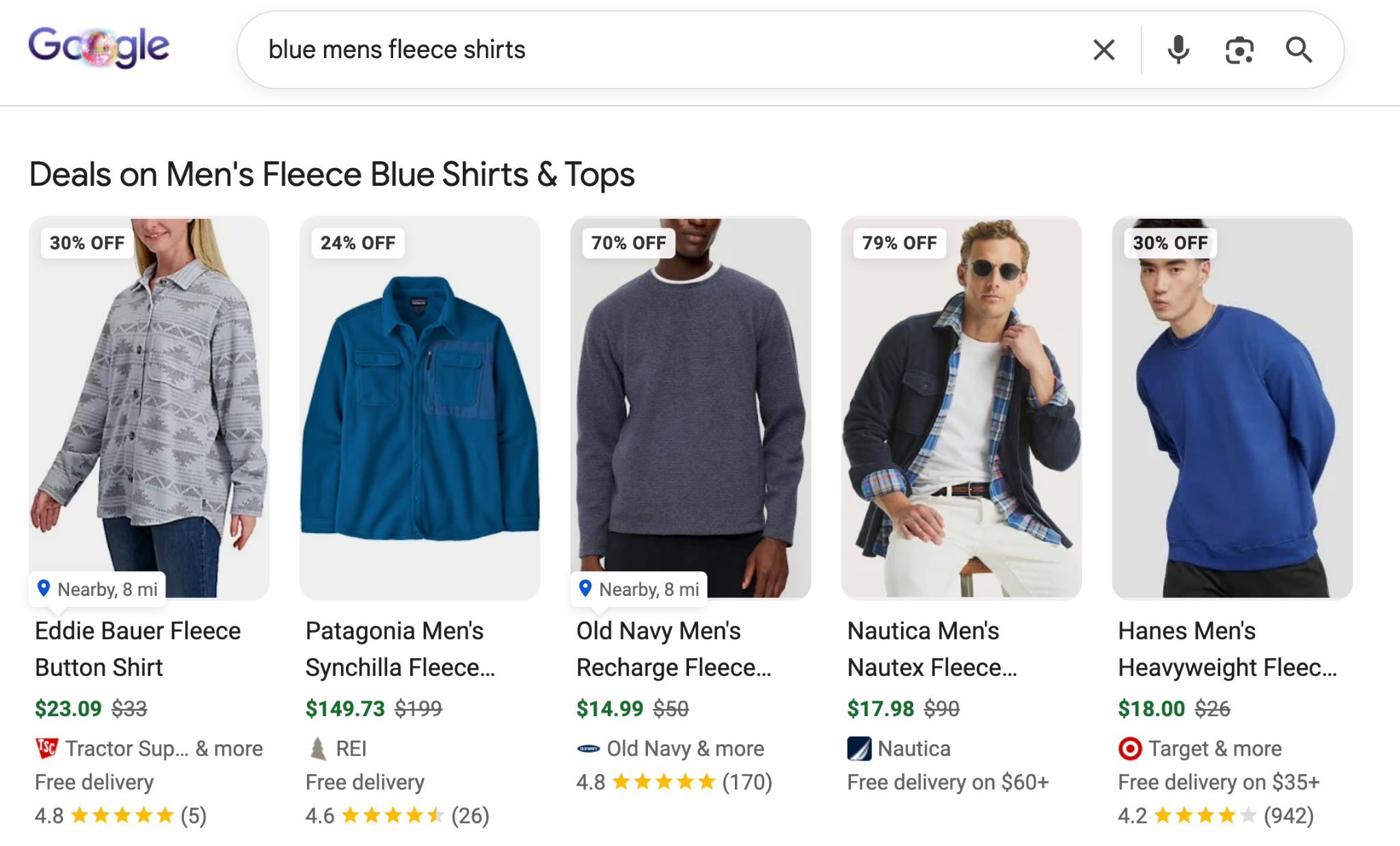
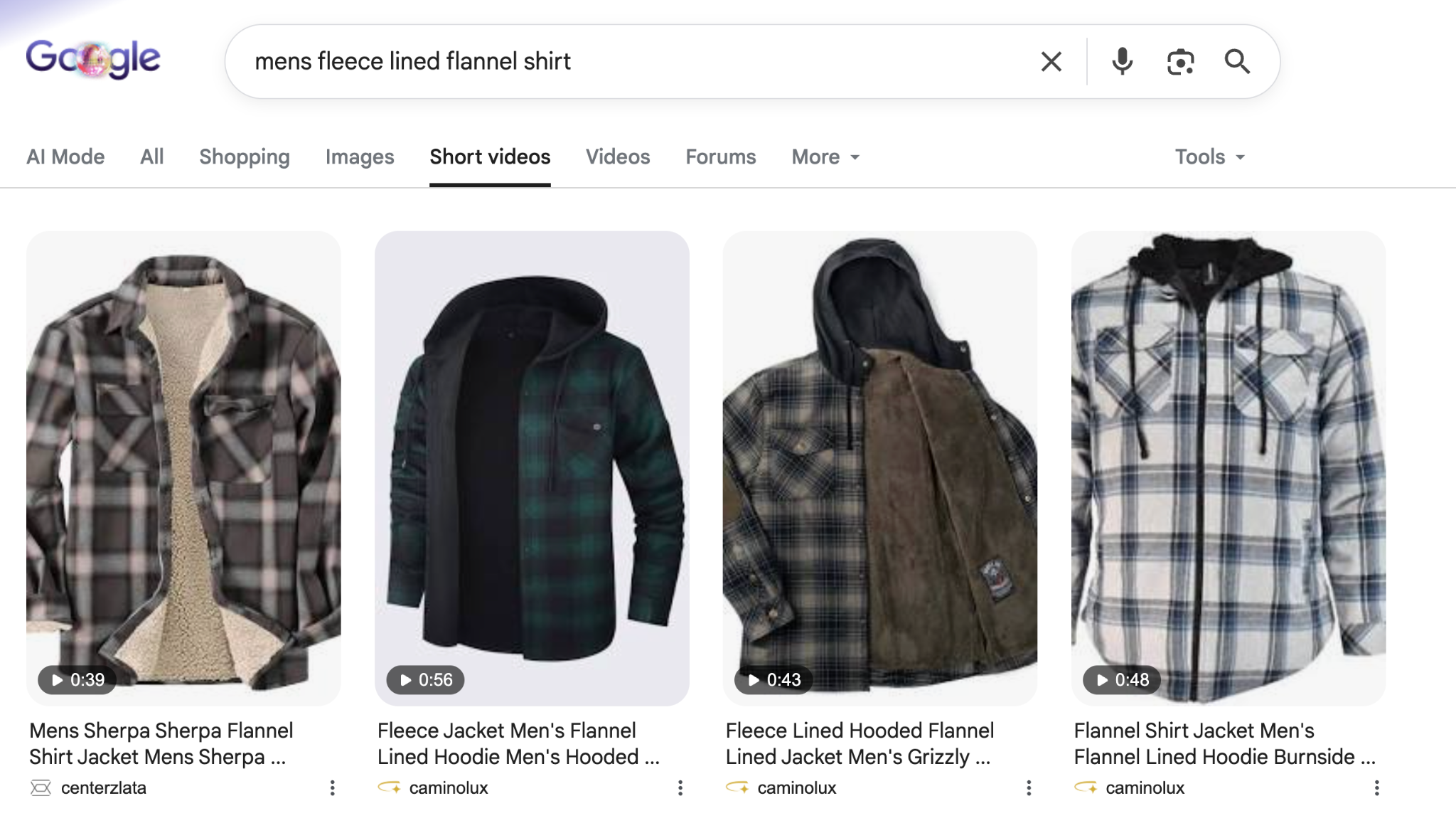
Clear relationship between the buyer intent and returned products. Good on page SEO!
"Sustainable linen midi dress navy" outperforms "midi dress" for fashion brands because the buyer has already self-qualified on fabric, color, length, and sustainability. Long tail keywords are easier to rank for, convert at higher rates, and match the multi-attribute nature of fashion shopping. "Linen high-waist midi skirt navy," "unisex streetwear hoodie," and "vintage-inspired denim jacket" are the kind of queries clothing websites should chase first.
Mapping Keywords to the Seasonal Buying Journey
Different keywords belong on different web pages and stages of the buying journey. Category pages target broad descriptive seasonal terms ("spring 2026 dresses," "linen summer collection"). Product pages target the specific style, material, color, and fit. Blog posts and trend posts target informational queries ("how to style a linen midi dress for summer"). Refresh this map every quarter because fashion industry trends shift, especially around seasonal collections, sustainability angles, and emerging silhouettes.
On-Page SEO for Clothing Product Pages
On page seo is the visible-content and HTML work that helps search engines understand exactly what you sell and exactly which shoppers you serve. For fashion ecommerce websites, the most important on page seo wins happen on product pages, where the duplicate-content trap lives and where the conversion happens.
Writing Unique Keyword-Rich Product Descriptions
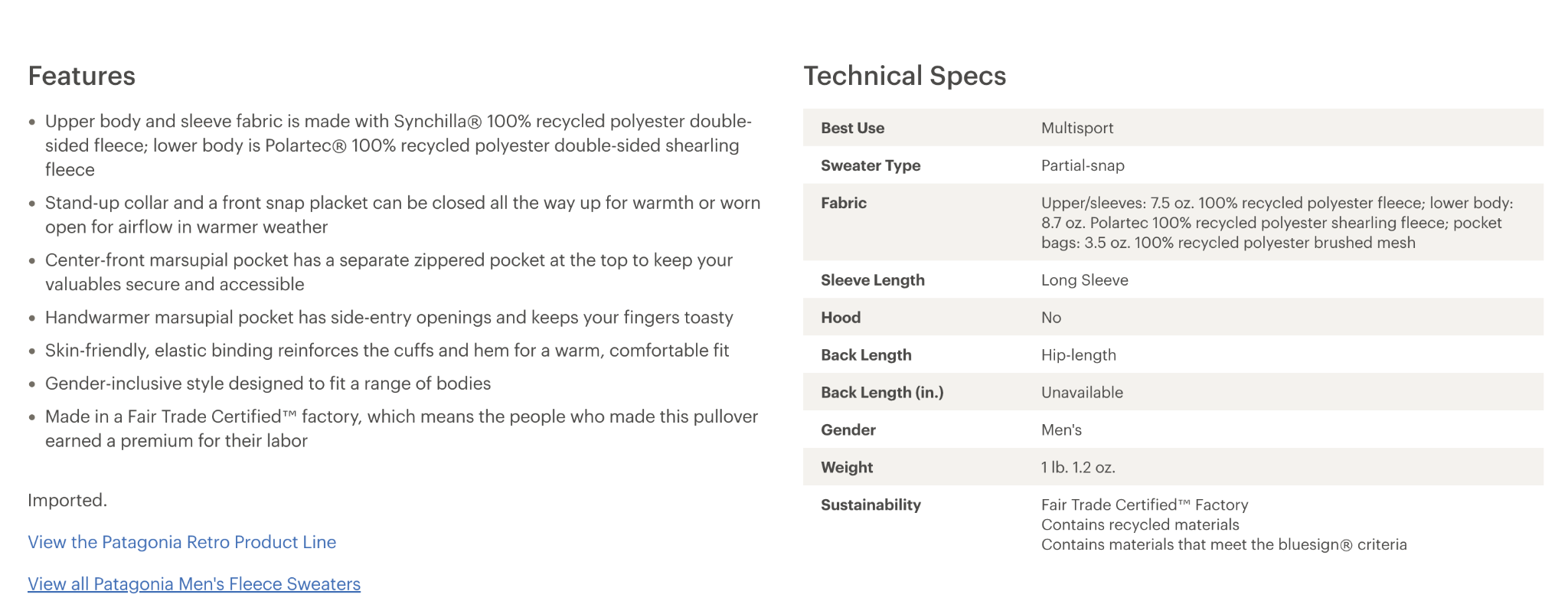
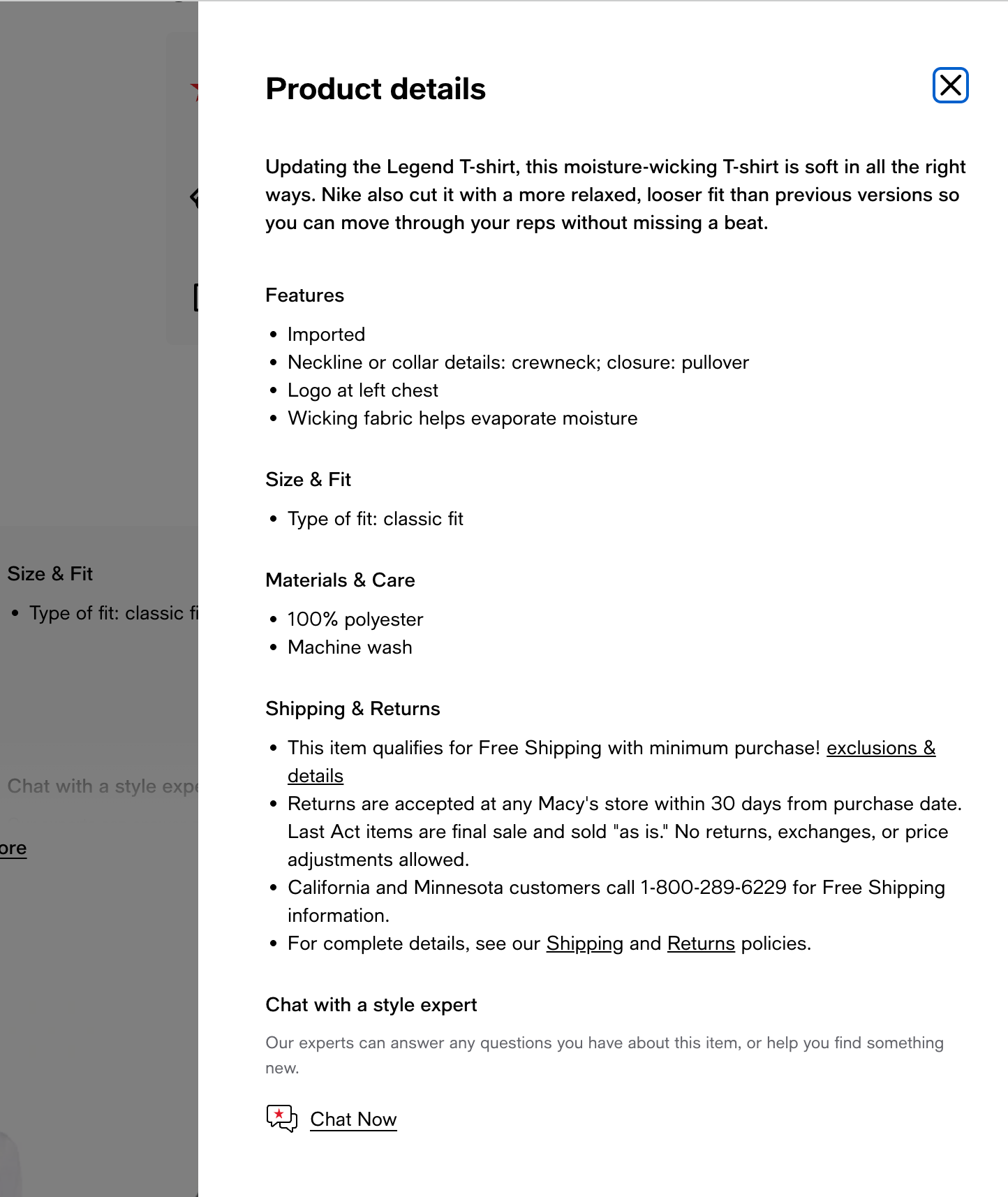
Great description that clearly outlines the product
Write unique product descriptions for every SKU as part of optimizing product pages. Lead with the material, the style, the fit, and the occasion the piece is built for. Pull in the right keywords shoppers actually search, written naturally, without keyword stuffing. Avoid copying manufacturer or platform-supplied product descriptions across SKUs, and avoid using the same description for every color variant of the same garment. Both patterns trigger duplicate-content filters and lose authority across the variants.
Materials, Fit, Sizing, and Care Detail
Fashion shoppers cannot touch the fabric before they buy online. The product page has to do that work for them. Include the fabric composition, the country of origin, the weight or denier, the fit (slim, relaxed, oversized), the model's height and the size shown in any lifestyle image, the care instructions, and a clear size and fit guide backed by customer feedback. The more honest detail, the more long-tail queries the page satisfies, and the lower the return rate runs.
Target Keywords in Page Titles, Meta, and Headings
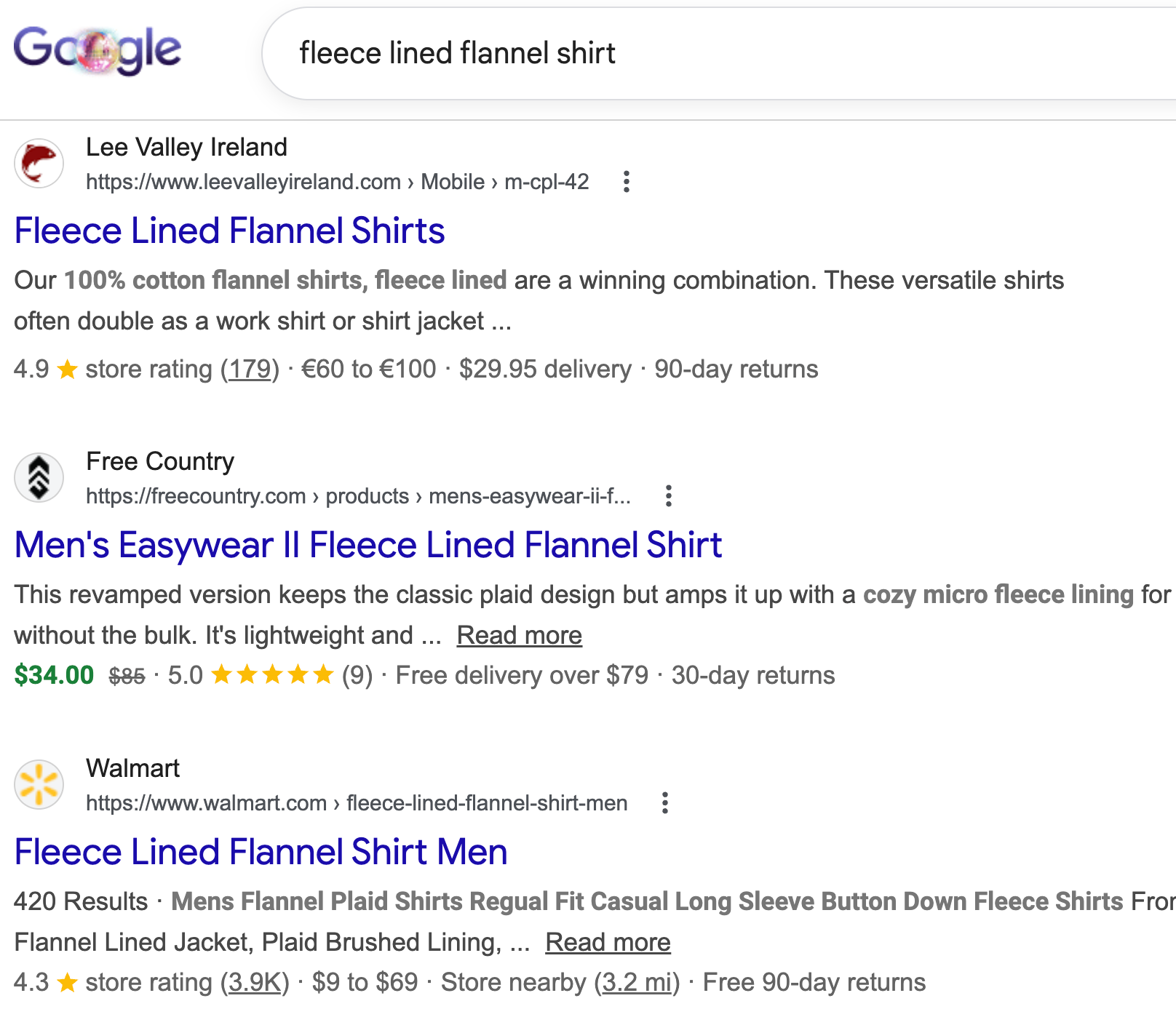
Main keyword right in the title
Place target keywords in the title tags, page title tags, and supporting title tags, the meta tags, the H1, and the supporting H2 and H3 structure, written naturally. A product title might read "Sustainable Linen Midi Dress in Navy, Eco-Friendly Spring Collection." The meta descriptions should front-load the value ("Hand-finished navy linen midi dress with adjustable waist, made from certified organic linen. Free shipping over $100."). Pair the H1 with strong meta descriptions and supporting meta descriptions on category pages. Use H2 and H3 sections to break product pages into Overview, Materials, Fit, Care, Reviews, and Styling as part of optimizing product pages so crawlers can extract each chunk easily.
Site Structure, Categories, and Faceted Navigation
Site structure is where fashion ecommerce catalogs win or lose for any fashion website. A logical category hierarchy with internal links, clean URL structure, and controlled faceted navigation are what separate a fashion site that scales cleanly from one that drowns in thin duplicate pages every season.
Category and Collection Pages With Keyword-Rich Headings
Build descriptive, keyword-optimized category pages and collection pages with H1s and intro copy that target the broad seasonal and stylistic search terms. Collection pages should highlight seasonal trends, curated outfits, or promotional bundles, with cross-links to related products and editorial content. Use internal links aggressively here as part of a strong seo strategy. Category pages link to products via internal links, products link back to categories, and blog posts link into both.
Controlling Faceted Navigation and Filter URLs
Faceted navigation is the silent killer of fashion ecommerce site crawl budget for the search engines. Every filter combination (size, color, material, length, sleeve, price band) generates new web pages, and without control those URLs proliferate into thousands of near-duplicate thin pages. Apply canonical tags on filtered URLs to point ranking signals back to the canonical category page, decide which filter combinations are worth indexing and which should be “noindexed”, and watch the indexed-URL count in google search console every month.
Schema Markup for Product, FAQ, and Review
Implement Product schema on every product pages as part of search engine optimization (with name, SKU, price, availability, brand, image, and aggregateRating), FAQ schema for sizing, materials, and shipping questions, and Review schema so social proof signals surface directly in the search results. Rich snippets give fashion ecommerce listings disproportionately more search engines results pages real estate than plain blue-link results, which translates into higher click-through rates on every keyword you rank for.
Content Marketing That Builds Trend Authority
Content marketing strategies for fashion ecommerce websites pull shoppers in before they are ready to buy and keeps the brand top of mind through the comparison and styling phases. Done well, it ranks the fashion brands for a much wider keyword footprint via content marketing strategies than the catalog alone supports and feeds traffic into product and category pages through internal linking.
Shoppable Videos and Short-Form Content
Outranking Amazon, Walmart, and larger brands
Short-form video on Reels, TikTok, and YouTube Shorts is a primary discovery channel for fashion brands and fashion buyers. Use keyword-rich blog content style descriptions on every video, embed shoppable video on category and collection pages, and build interactive lookbooks where each look uses internal links to the specific products. Video also boosts dwell time on product pages, which Google and the major search engines read as a strong engagement signal driving organic traffic and targeted traffic.
Visual Content and Image SEO to Boost Search Rankings
Visual content is fashion's superpower for SEO. Multi-angle product photography, lifestyle imagery, lookbooks, and video are the assets that fashion brands' buyers actually use to evaluate a piece, and search engines have learned to weight them accordingly.
Multi-Angle Photography and Video for Fashion Ecommerce Sites
Every product page should carry at least four to six high-quality product photos as part of image optimization: front, side, back, detail shots of the fabric, and at least one lifestyle image on a real person. Add a short video showing the drape, the movement, and the scale on a body. Host video externally on YouTube or Vimeo and embed it. The view count on the external host becomes an additional organic discovery channel for the brand.
Image File Names, Alt Text, and Image Schema
Rename every image file before uploading as part of optimizing product pages. "sustainable-linen-midi-dress-navy-front.webp" carries far more SEO weight than "IMG_0042.jpg." Alt text should describe the garment, the material, the color, and the style in a natural sentence. Add image structured metadata so the search engines understand which image goes with which product. Compress every asset to WebP for site speed, lazy-load below-the-fold imagery, and watch Largest Contentful Paint stay under 2.5 seconds.
User-Generated Content as an On-Page SEO Asset
User generated content does double duty for fashion ecommerce websites. User generated content builds trust with the next buyer and feeds fresh keyword-rich content into the page that search engines pick up as additional context.
Reviews and Customer Photo Galleries
Display customer reviews and user generated content directly on product pages with the verified-buyer badge, the rating, the date, and the review text. Encourage shoppers to upload photos with their reviews and feature a UGC photo gallery on every flagship product. Real photos of potential customers and existing customers wearing the garment outperform polished editorial shots on conversion for almost every category.
Tagging UGC for Search Engine Categorization
Structure UGC galleries so search engines can categorize the image assets. Tag every uploaded user generated content photo with the product identifier, the customer's described fit, the color shown, and any styling context. That tagging makes the gallery indexable, which means it can rank in image search alongside the brand's professional photography.
Technical SEO and Page Experience
Technical seo keeps a fashion website fast, mobile-friendly, secure, and easy for crawlers to traverse. The technical seo bar in the fashion industry is high because the catalogs are large, the variants are many, and the buyer expectation for speed is unforgiving.
Core Web Vitals and Mobile-First Design
Run PageSpeed Insights and Lighthouse against category, product, and homepage templates to monitor site speed. Targets are Largest Contentful Paint under 2.5 seconds, Interaction to Next Paint under 200 milliseconds, and Cumulative Layout Shift below 0.1. Fashion brands' sites usually fail LCP on uncompressed hero imagery and CLS on late-loading review widgets, both fixable in a single sprint. Google and the major search engines index the mobile version of your site for mobile devices, so mobile-first responsive design is non-negotiable.
301 Redirects for Out-of-Stock and Seasonal SKUs
Set 301 redirects for retired website pages as part of fixing broken links. Point each redirect at the most relevant destination: the parent category, a similar in-stock product, or a curated New Arrivals page. The redirect preserves the link equity earned by editorial coverage and prevents broken links, keeps inbound traffic in the brand, and prevents the 404 errors that fragment site authority over time.
Multi-Channel Discovery: Selling Through Third-Party Platforms
Clothing brands rarely sell only through their own website. The biggest revenue lift in 2026 comes from showing up wherever fashion buyers are already searching, which means Amazon, Walmart, Pinterest, Instagram, and other marketplace and visual discovery surfaces. Each channel has its own SEO rules and conversion economics, but the same enriched product data that ranks on the brand site can feed every one of them. Treat third-party channels as additional shelves your catalog is on, not as a separate strategy.
Amazon and Walmart Marketplaces
Amazon and Walmart drive a huge share of fashion search volume, especially in casual apparel, basics, accessories, and footwear. Optimizing for these marketplaces means complying with each platform's title and description rules, structured attribute requirements, and feed standards. Amazon titles favor a brand-first format with key attributes packed in (brand, model, size, color, material). Walmart rewards complete attribute coverage in its product specifications and consistent NAP-style brand information across the catalog. The same enriched product data the Pumice Merchandising Pipeline generates for the brand site can be reformatted to comply with each marketplace's rules in the same configuration run.
Pinterest Rich Pins and Visual Discovery
Pinterest is one of the highest-converting visual discovery surfaces for fashion. Activate Pinterest Rich Pins so every pinned product carries up-to-date price, availability, and description data pulled from the brand site, and push the full catalog to Pinterest's product feed. Tag every image with the product identifier so Pinterest Lens (the platform's visual search) can index the photography directly. The image SEO work the brand site already does (descriptive file names, alt text, image schema) compounds across Pinterest and Google image search at the same time.
Instagram Shopping and Shoppable Posts
Instagram Shopping ties your catalog directly into posts, Reels, and Stories so shoppers can tap a product tag and check out without leaving the platform. The setup is a one-time effort: link your product catalog to Instagram via the Meta Commerce Manager, tag products in every applicable post, and treat Reels with strong product callouts as a primary discovery play. Short-form video on Instagram and TikTok converts at rates that often beat Google organic for impulse fashion categories, which makes it a high-leverage extension of the brand site's content strategy.
Feeding All Channels From One Source of Truth
The technical challenge of multi-channel fashion SEO is keeping every channel synced with the same product information. When a SKU's fabric composition, sizing, color description, or imagery changes on the brand site, every marketplace and visual discovery feed needs to update too. The Pumice Merchandising Pipeline becomes the source of truth: enriched titles, product descriptions, attributes, and images flow into the brand site, Amazon, Walmart, Pinterest, and Instagram feeds from the same configuration. One catalog update, every channel updated, no manual reformatting.
Automate Clothing Product Page Enrichment and SEO Optimization With Pumice
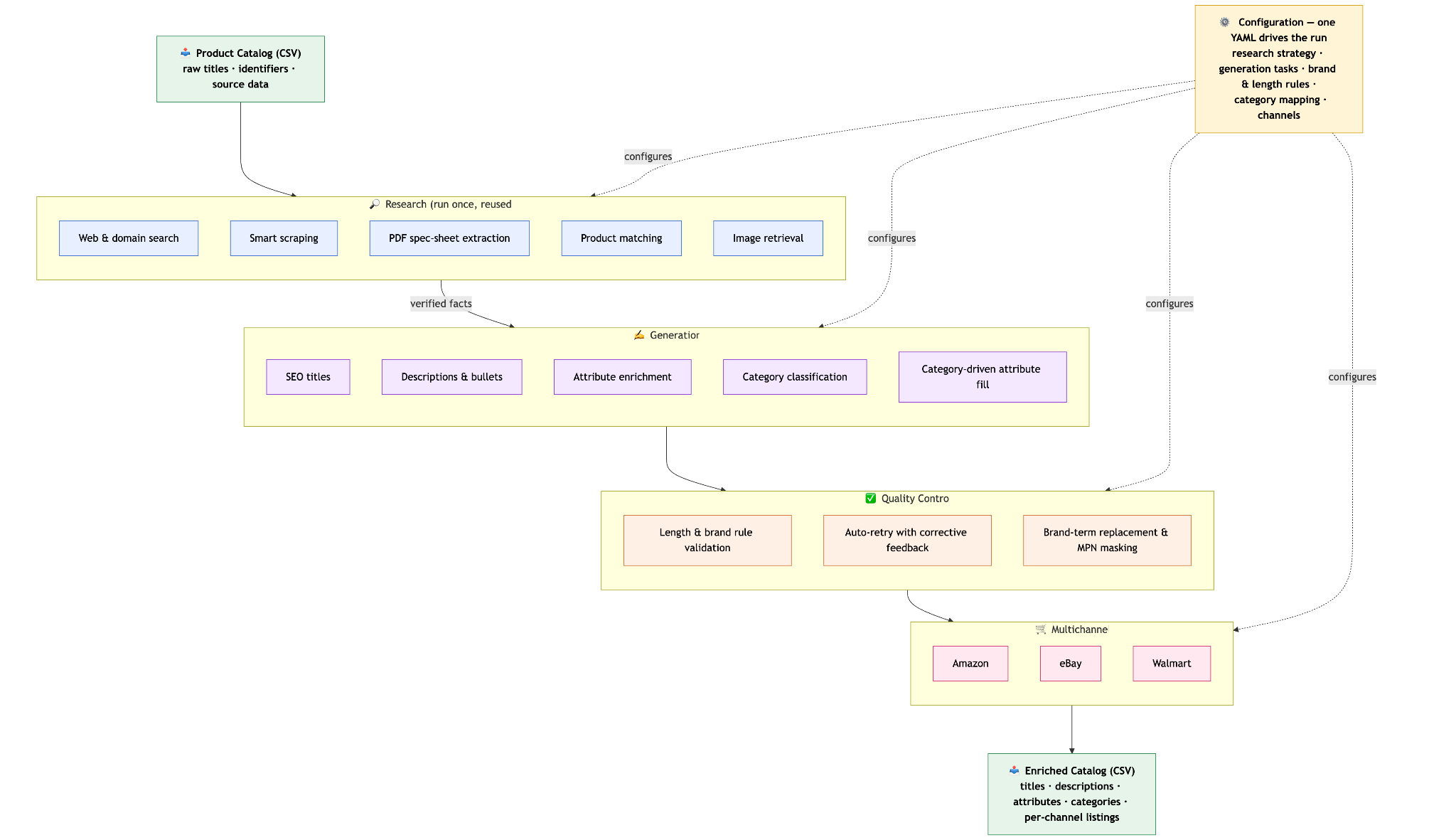
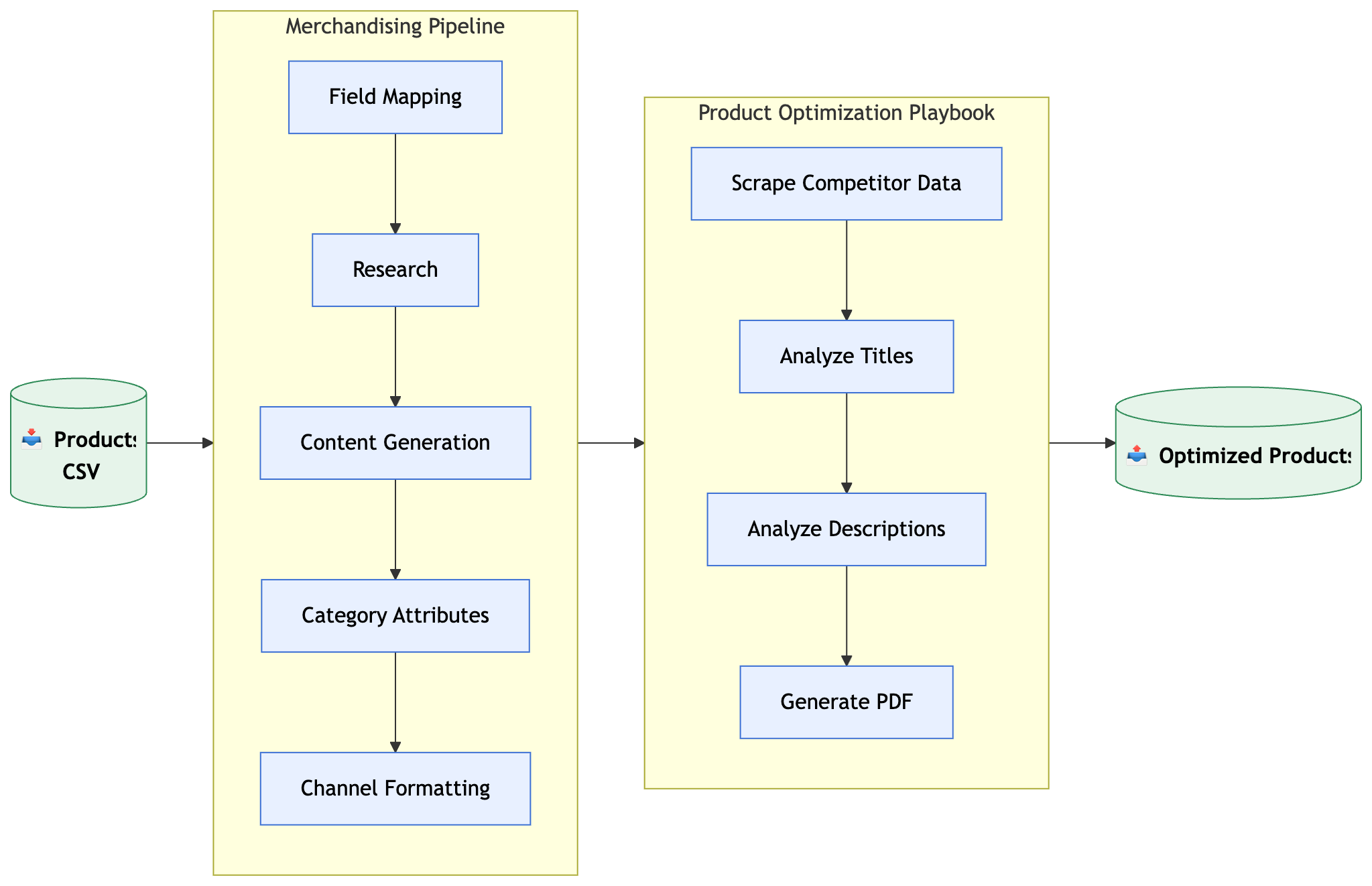
All the enrichment and on page seo best practices above add up to real work when a fashion ecommerce catalog runs into the thousands of SKUs and almost every description started life as a sparse vendor feed or duplicate variant copy. Pumice automates the entire per-product search engine optimization workflow as part of seo for fashion with two complementary tools that map directly onto the highest-priority lever: making product listings complete and SEO-ready. The Merchandising Pipeline runs the full enrichment plus generation workflow across the catalog. The Product Page Optimization Playbook runs a focused SEO pass on individual listings after the data is complete. Most fashion brands optimize their catalog by running both in sequence, enriching the catalog first and then running the focused SEO pass on flagship SKUs. It is easier to understand them on their own first.
Method 1: Merchandising Pipeline When Manufacturer Data Is Sparse
Method 1 uses the Pumice Merchandising Pipeline. Use it when the fashion ecommerce catalog is thin, which for most fashion and apparel brands carrying multi-brand inventory is almost always the case. Short page titles, half-written product descriptions, missing fabric and care details, no Q&A sections, weak product imagery, and identical copy across color variants are the common signals. Trying to optimize a listing in that state means optimizing on top of bad data and weak seo performance, and the output is shallow, generic, and easy for search engines to ignore.
The merchandising pipeline runs a research step first as part of the fashion brands optimize workflow. It searches the web, finds the manufacturer or brand product page (or other websites with the SKU), scrapes the real fabric composition, care instructions, sizing data, and structured product attributes, validates the source, then generates an enriched title, description, attribute set, and Q&A from the validated data. This is the foundational method for seo for fashion because you cannot run a real SEO pass on a page that does not have enough content to optimize.
Method 2: SEO Optimization When Product Data Is Complete
Method 2 uses the Pumice Product Page Optimization Playbook for a focused search engine optimization pass for your clothing website. Run it after Method 1 has enriched the online fashion store and online store catalog, or on flagship SKUs that already have a workable title, a real description, comprehensive specs, and the supporting attributes a shopper needs. The optimization process is a focused SEO pass. You feed the existing product data and the main target keyword to the Pumice Agentic System, the agents run gap analysis, competitor analysis, SEO keyword analysis using seo tools, and on-page metrics against the top-ranking competitors, and you get back a structured brief that tells you exactly what to change to improve search engines rankings to improve search engines rankings.
This is the right method when the data quality is good but the listing is underperforming in the search engines results. The agents do not invent facts or generate new product data, which is the bedrock of any successful seo strategy and search engine optimization program. They restructure and reframe what is already there with data-driven recommendations, seo consulting, expert seo consulting style guidance, and seo consulting playbooks for search engine rankings grounded in the live SERP.
Below is the three-step workflow that takes both methods into account based on your current data structure.
In short: Run Method 1 (Merchandising Pipeline) across the catalog to enrich sparse PDPs, then Method 2 (Optimization Playbook) on flagship SKUs, slow movers, and every new collection launch.
The 3 Steps of AI-Driven Clothing Page Optimization
This workflow breaks down into three steps that apply to both methods of seo for fashion. The steps run in the same order whether the fashion website data is sparse or complete. The only difference between Method 1 and Method 2 is whether Step 1 includes live web research.
Step 1: Research Phase for Product Data Augmentation
The research phase focuses on augmenting the product data you have for a specific SKU. The goal is to enrich the available information so the new page is complete, without allowing AI to hallucinate product specifications. The pipeline pulls live manufacturer pages and ranked competitor listings from other websites so the generation step has real facts to work with when building each enriched page.
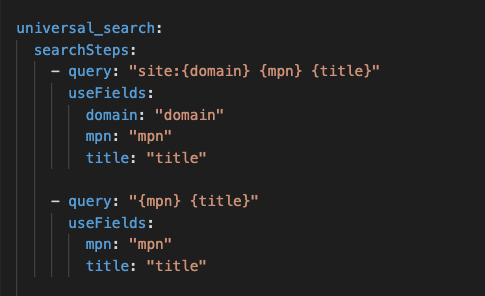
The research phase is fully configurable per run through a YAML configuration file. You define which search steps to run, the order they run in, and which fields from the CSV row get filled into each query. A typical first query is a tight site search like site:manufacturer.com plus the SKU and product title, and the placeholders for domain, MPN, and title pull straight from the matching columns in your CSV row.
Simple config that first searches a specific site with the MPN and title, then falls back to general web search
Fallback search queries chain into the same configuration. If the narrow manufacturer-site search returns nothing, the next query drops the site restriction and searches the broader web for the same SKU and title. You can chain as many fallback steps as the catalog demands. The stopOnFirstSuccess setting tells the pipeline to stop the moment one query returns useful results, so you never waste compute running a broader search after a narrow one already worked.
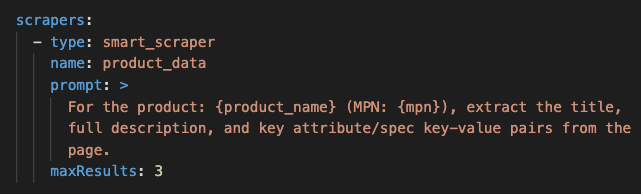
The configuration also controls how the scraper reads the pages it finds. The smart_scraper accepts a custom prompt that tells it exactly what to extract from each manufacturer or competitor page, whether that is the title and full description, the fabric composition, the care instructions, the sizing table, or a specific set of attribute key-value pairs. A maxResults setting caps how many pages get scraped per product, which keeps the pipeline fast and prevents diminishing returns on near-duplicate sources.
Simple scraper setup
For brands that received manufacturer PDF lookbooks or vendor line sheets, the research phase can use the PDF alongside the web scraper for additional grounded product data. Pumice breaks the PDFs into a readable format, extracts the structured product data, and feeds it into the same generation steps. A focus block in the configuration lets you tell the writer which source to trust when sources disagree, with options for webscrape (prefer the live page), domain (prefer specific trusted brand websites you list), or pdf_catalog (prefer the uploaded line sheet).
Because every part of the research phase lives in the configuration file, you can change the approach on a per-run basis. Some runs need an aggressive web scrape with multiple fallback queries across the brand ecosystem. Some need a single PDF line sheet parse against a vendor feed. Some need a hybrid where the search prefers a brand domain first and falls back to the open web. The same Pumice pipeline handles every variation without code changes, which is what makes the workflow scale across very different clothing catalogs.
Step 2: Generate Enriched Page Content Using Rules, Examples, and Validation
The generation step is where the enriched page content gets created: the new title, the rewritten description, the expanded attribute set, and the Q&A block. The system can create thousands of complete listings per run. The generator receives the existing product data, any enriched research data from Step 1, the rules you define, the examples you provide, and the validation thresholds you set.
Rules That Shape the Output
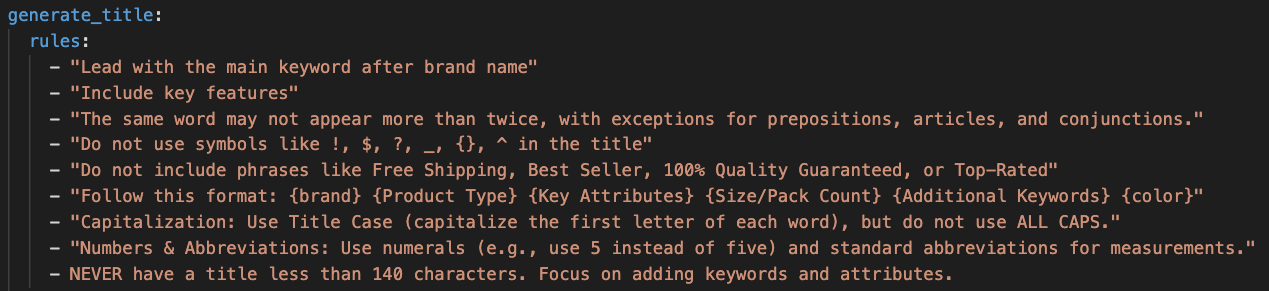
Rules are plain language instructions that tell the model how to write each piece of the page in your seo strategy. They read like a brief you would give a copywriter and shape every part of the output.
Good examples for fashion brands titles and product descriptions include rules like "lead with the material and style," "include color, fit, and length in the title," "reference the season or collection," "avoid all caps and promotional text," "include sustainability and certification claims only when verified," and "end the description with a styling suggestion that links to a companion product." You can write as many or as few as you need. Some fashion brands write forty rules because the brand voice is tightly defined. Others get strong results with five.
Examples That Teach the Model What Good Looks Like
Title examples in the config
Examples are sample listings that demonstrate what a good output looks like for your fashion brand voice and category. Where rules describe the target in words, examples show the model the actual shape. A concrete example like "Sustainable Linen Midi Dress in Navy, Adjustable Waist, Eco-Friendly Spring Collection" (a title that targets relevant keywords) teaches the model the order. A pattern example like "{material} {style} {silhouette} in {color}, {fit detail}, {collection or sustainability angle}" teaches the model the template.
Mix concrete and pattern examples for the best results. Two finished listings plus one template gives the model both a polished target and a clear structure to follow.
Validation That Enforces Page Limits
Validation runs after the content is written and enforces hard rules tied to your seo strategy the model must obey. The most common validation rules are character or word counts. A maximum title length keeps the title from being truncated in the search results. A minimum description length prevents thin, useless outputs. You can also validate that required fields (fabric composition, care instructions, country of origin, certifications) are populated before the row is accepted.
Limits for fashion website listings depend on where the listing appears. Product detail pages on the brand site usually take long-form descriptions of 200-500 words. Shopify, Pinterest catalog feeds, and Instagram Shopping have their own truncation rules that the configuration can enforce.
Step 3: Optimize the Page in the SEO Playbook
The Pumice Optimization Playbook turns generated and enriched product content into a publish-ready, SEO-focused listing tuned for organic traffic. It produces a marketing brief like you would get from an agency, in minutes instead of weeks. For flagship fashion brands' SKUs and seasonal hero products, this step is where the per-page polish happens after the bulk enrichment work in Method 1.
Playbook Output and Action Items
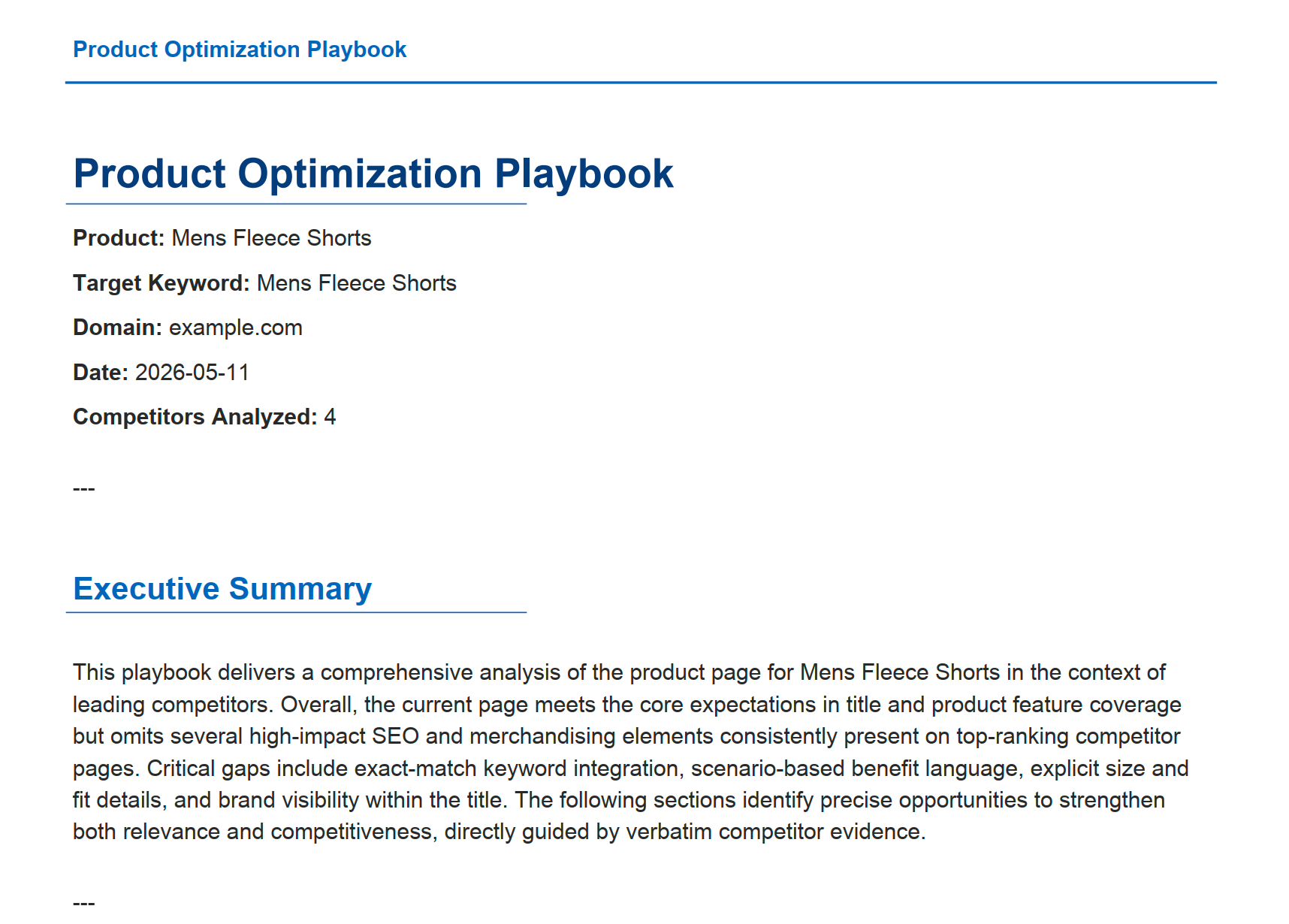
The playbook output is a structured PDF that supports your seo efforts that breaks down the current product data, the competitor data from the first-page search results for the target keyword, the gap analysis between the two, and a list of specific action items. It includes keyword distribution analysis showing which ranking terms and search terms appear in the top-ranking competitor listings, images, and review blocks, and which appear in yours.
Snippet of data created during competitor analysis for a specific product
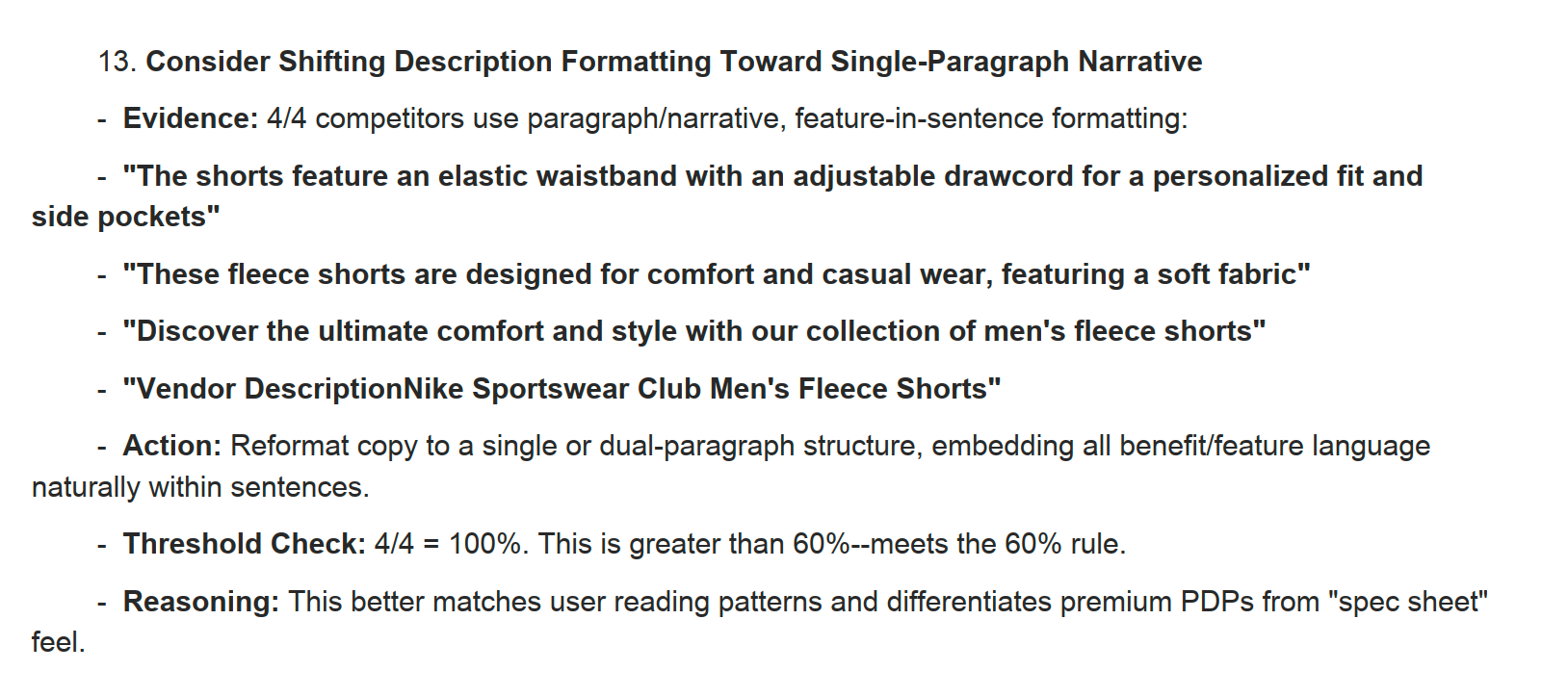
Action items always carry four pieces of information. The action to take, the evidence behind it, the threshold check showing how many competitors actually do this thing, and the reasoning. Common action items that boost your seo efforts for fashion brands' pages include adding the fabric composition to the title, adding styling and occasion paragraphs that competitors include, listing certifications in the spec table, adding fit notes that reference the model's height, and structuring the description with consistent H2 and H3 sections.
Method 1 in Practice: Running the Merchandising Pipeline to Enrich First | Linen Midi Dress
Method 1 starts with a CSV file of products pulled from the fashion brands' ERP or PIM and a configuration file that defines the run. The pipeline reads each row, runs the research phase against the brand ecosystem, validates the source, and generates enriched content backed by validated data. This is where the catalog goes from sparse vendor feed copy to complete fashion ecommerce seo listings, SEO optimization ready listings at scale.
Mapping the CSV and Configuration File
Each CSV row represents one product in the fashion website. The pipeline needs a current title column, a current description column, and a main product identifier like a SKU, MPN, or UPC. A domain column is also recommended because it lets you tell the pipeline exactly which brand or vendor websites to pull data from. This is commonly the brand's own lookbook page where the canonical fabric and care detail lives.
Tracing the Linen Midi Dress Through Research and Validation
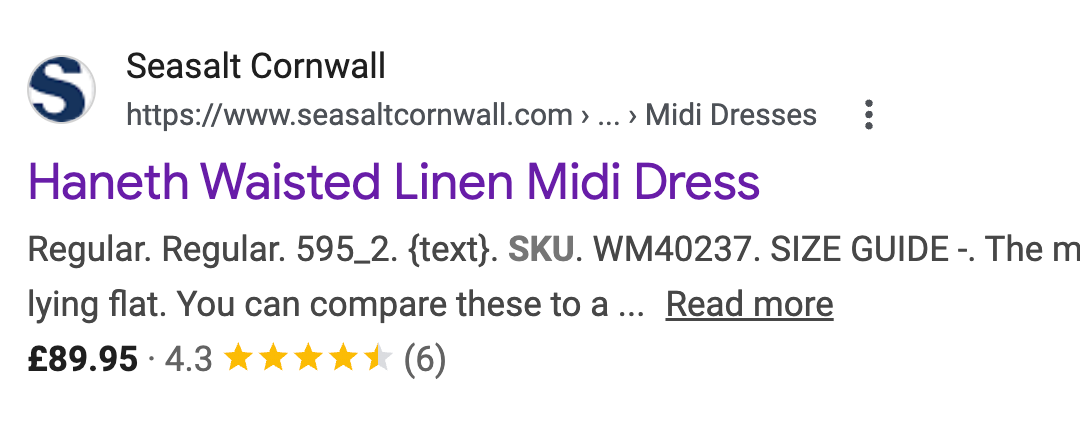
The linen midi dress shows up in the CSV as WM40237 with a one-line title and a short description. The first configured search fires WM40237 Haneth Linen Midi Dress and lands on a vendor selling this product.
Finds this url, you can see the sku matches.
The smart_scraper pulls back what the vendor feed dropped: 100% European linen, GOTS-certified organic, 38-inch hem, machine washable, model 5'9" in a size medium. The validator confirms the scraped SKU matches the CSV row and commits the enriched data.
Generating the Enriched Page From Validated Data
After the validated research data lands, the page generator runs with rules, examples, and validation just like Method 2 to support fashion brands' optimize workflows. The difference is that the inputs now include the enriched data from the live brand page, so the generator has comprehensive facts to work with.
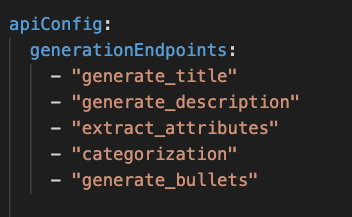
Make sure to define which generation phase steps you want to run
An example before and after for a fashion SKU might go from a one-line title "Linen Midi Dress" and a two-sentence description, to "Sustainable Linen Midi Dress in Navy, Adjustable Waist, Eco-Friendly Spring Collection" with a 400-word description, a 12-row spec table covering fabric composition, care instructions, fit notes, model height, and country of origin, a five-entry Q&A block on sizing and styling, and structured Product schema. Every element traces back to a validated brand source.
Method 2 in Practice: Optimizing a Mens Fleece Shorts Page
Walking through a real product example makes the method concrete. For this walkthrough, the product is a Mens Fleece Short for a fashion brand catalog page with a usable title, a complete description, and full specs already in place (either originally complete or enriched by Method 1). The target keyword is "mens fleece shorts" . The data is good, the page is just not ranking.
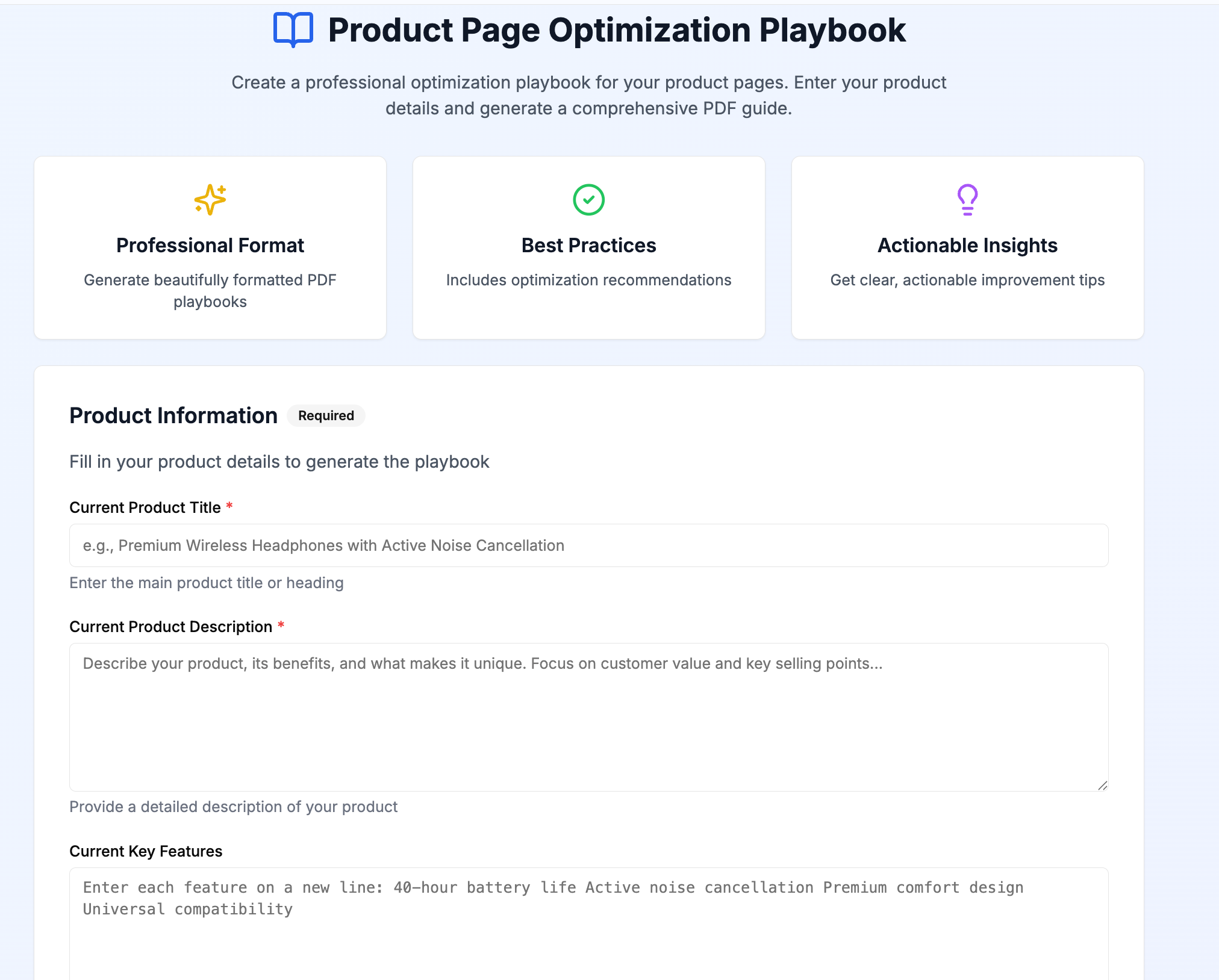
Loading the Product Into the Optimization Playbook
Open the Pumice Product Page Optimization Playbook and paste in the existing title, description, and supporting attributes (material, fit, length, color, sustainability claims, certifications).
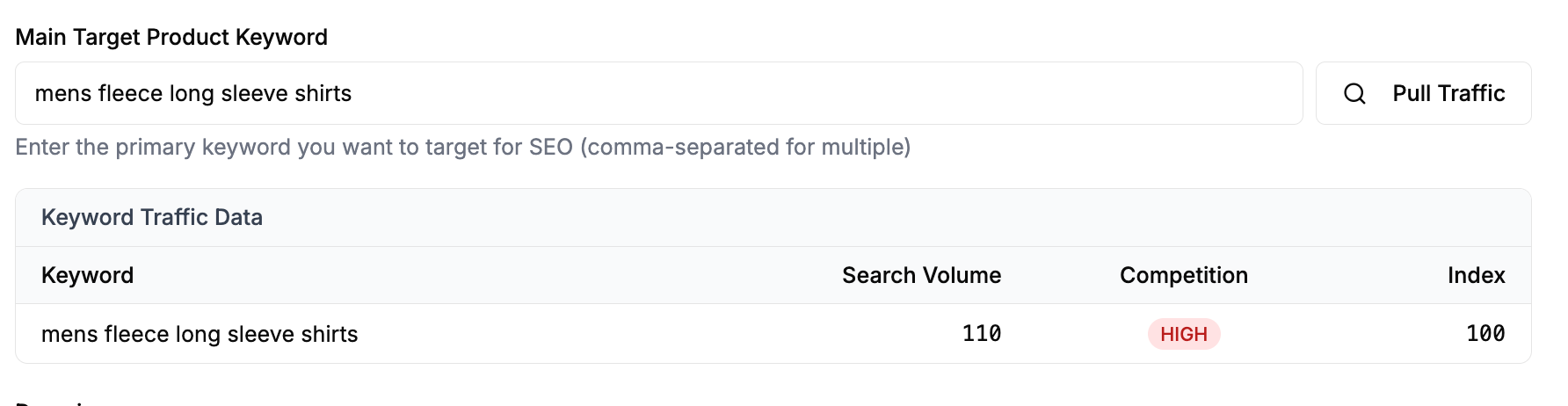
Enter the main target keyword, hit Pull Traffic to see live search volume, difficulty, and seo rankings potential, and confirm the keyword is worth chasing. Use this same feature to perform lightweight keyword research with google keyword planner-style data and explore long-tail shopper queries like "navy linen midi dress eco-friendly" before locking in the target.
Enter your own domain so the system excludes your own pages from competitor analysis. The Pumice Agentic Framework then runs gap analysis to support your seo efforts, keyword analysis, competitor analysis, and on-page metrics in the background against the first-page SERP.
Reading the Data Analysis Output
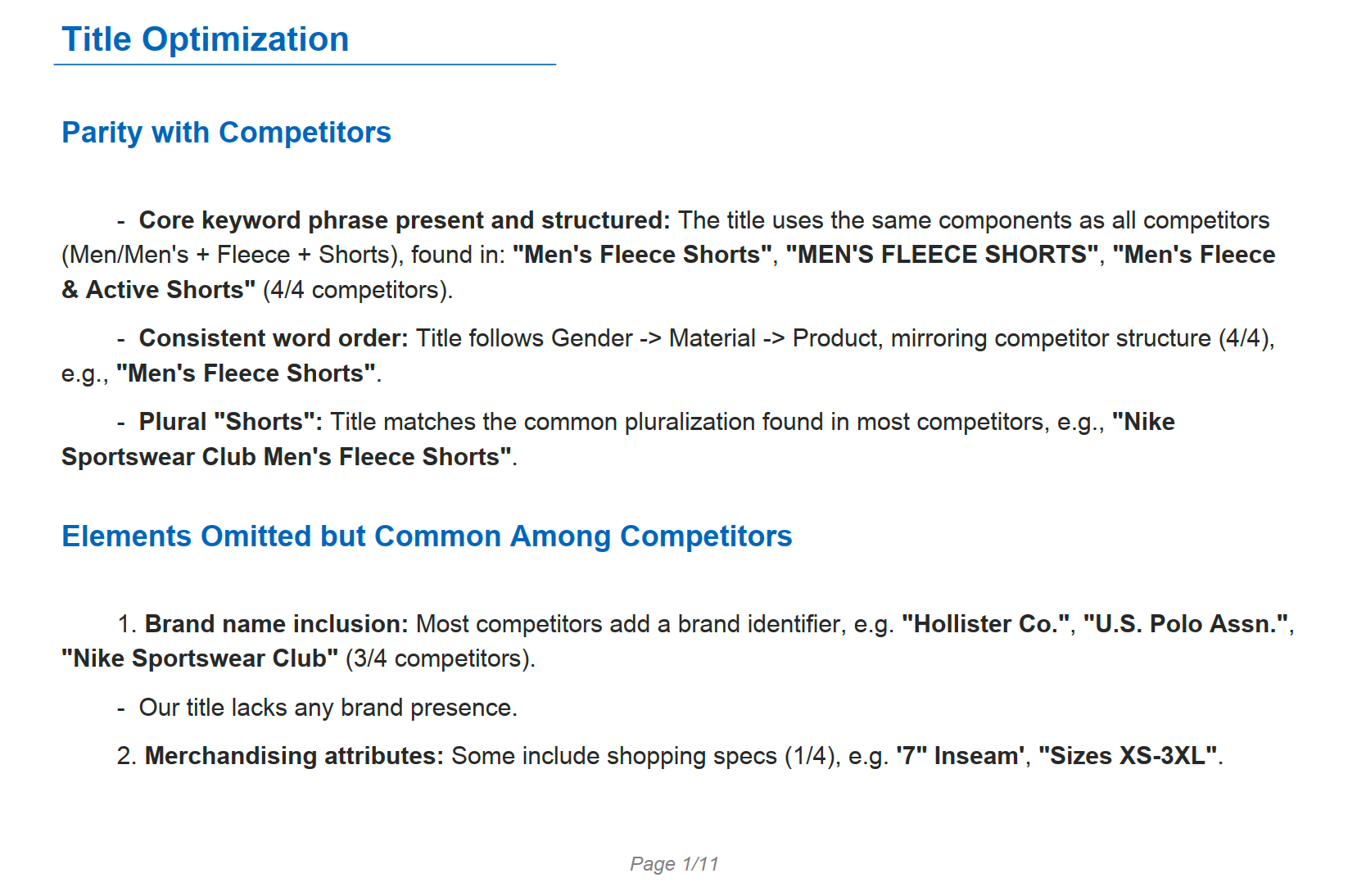
The playbook returns a multi-page PDF per product as part of fashion brands seo workflow. The shared frequency section confirms that the top-ranking competitor page titles all include the material, the length, and the color, the word order matches a consistent pattern, and the title is an exact match against the shopper query. That is the baseline.
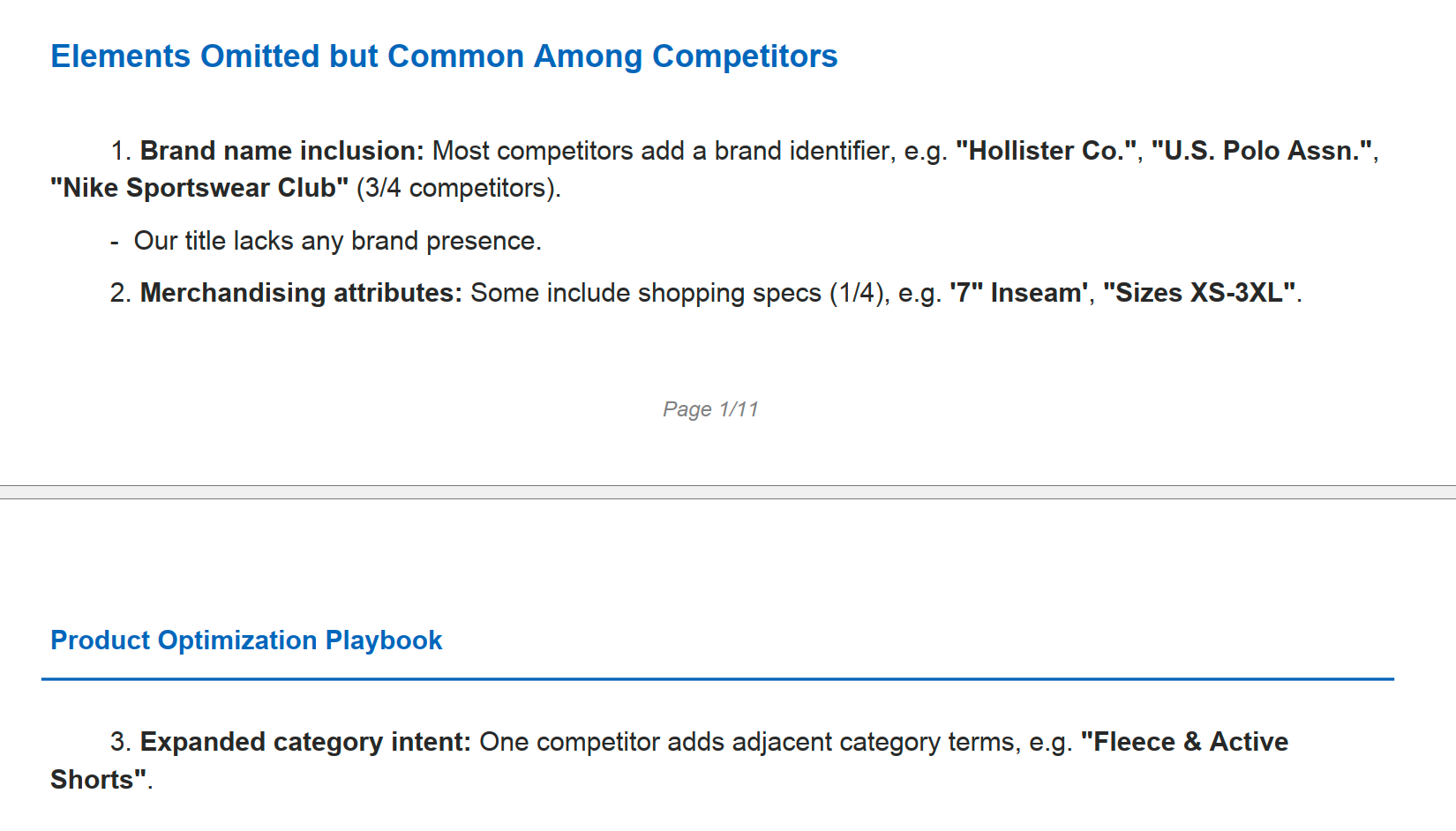
The interesting part is the differences. Three of four competitors include specific brand names in the title.
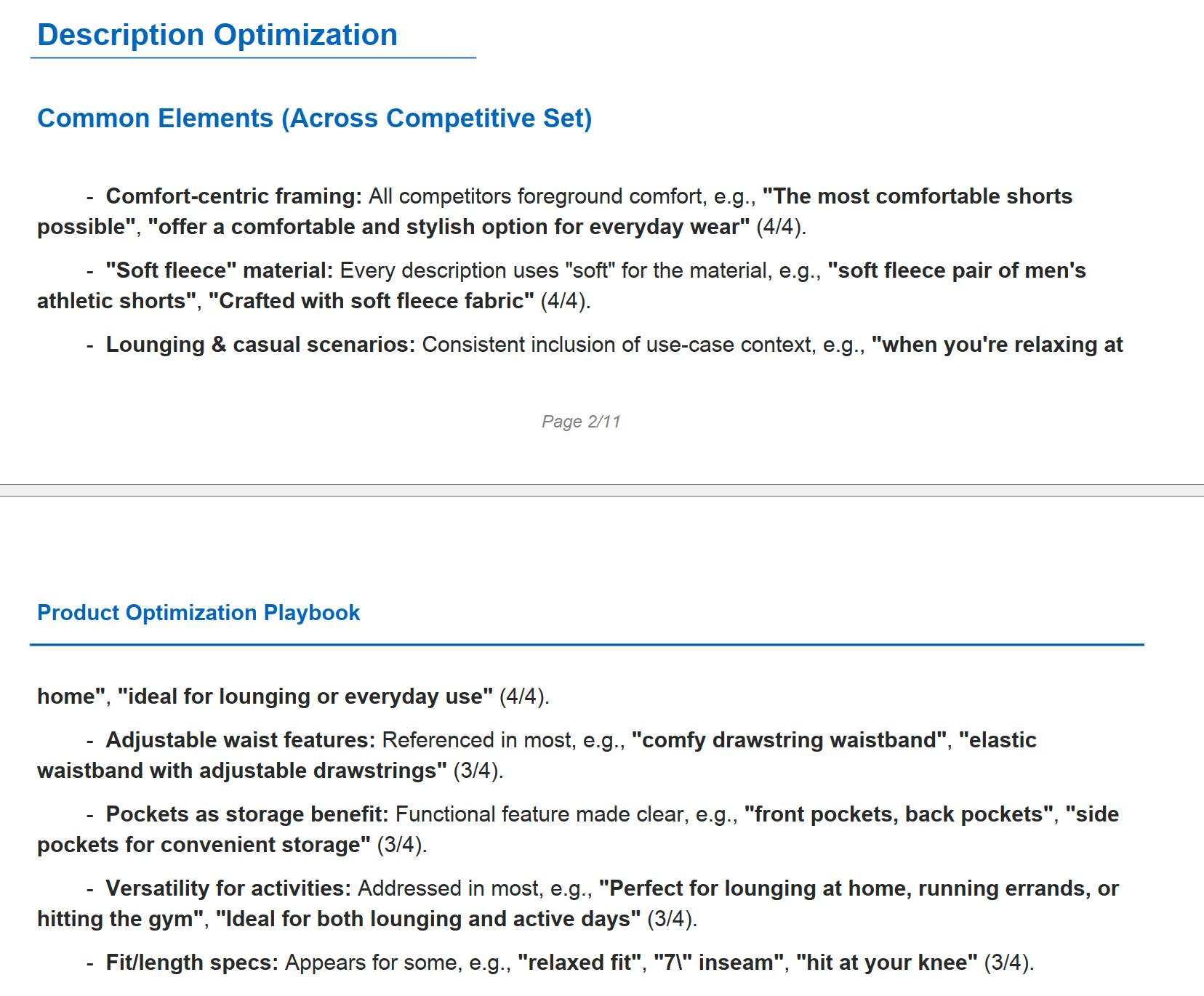
The description is even more interesting. All customers ranking for this keyword are using very specific patterns and terms in the description.
Applying the Page Recommendations
The recommendations section translates each gap into a specific change. Upgrade the description to really focus on the key features/attributes of this product, use language around when to wear the shorts, and outline material. Each recommendation includes a threshold check showing how many of the top competitors do it.
Apply the changes, rerun the playbook to confirm the new page closes the gap and search rankings improve, and the SKU is ready to publish. The same workflow scales to hundreds of flagship fashion SKUs without losing per-product specificity.
Measuring SEO Results and Refining the Strategy
Track organic traffic and online sales with google analytics, landing page performance, online sales, average order value, customer lifetime value, and revenue attributed to organic traffic inside google analytics (GA4) and your ecommerce platform. Layer in google search console (and google analytics) for queries from the search engines, indexed pages, and google search console rich result reports, indexed pages, Core Web Vitals, rich result enhancements, and index coverage.
Set quarterly benchmarks for seo performance against organic traffic growth, rankings and search engine results positions for primary seasonal query sets in the search engine results, indexed product page count, rich snippet impressions, revenue from organic search, and conversion rate on organic landing pages. Web pages with high impressions but low clicks need stronger title tags and meta descriptions on their key web pages. Pages with traffic but low conversion need better imagery, clearer fit detail, or a stronger styling suggestion at the end of the description.
Frequently Asked Questions
How long does SEO for a clothing website take to show results?
Most fashion ecommerce websites see meaningful organic traffic lift and ranking improvement within 3 to 6 months when they work consistently on optimizing product pages, faceted navigation cleanup, and technical seo fixes. Long tail keywords with low competition often move in 60 to 90 days. Competitive head terms like "dresses" or "jeans" can take 9 to 12 months in the search engines results pages or longer against the major fashion ecommerce sites. These can be sped up with guest posts on fashion blogs or fashion directories.
What is the most important metric for clothing website SEO?
Revenue from organic traffic is the most important metric for fashion brands. Behind it sits indexed product page count, rich snippet impressions, organic conversion rate, and average order value on organic traffic. Vanity metrics like total organic traffic sessions matter less than seo performance than the share of those sessions that turn into checkouts or repeat customers.
Can a clothing brand handle SEO in-house?
A small apparel brand can handle the basics in-house: requesting reviews, publishing simple styling guides on fashion blogs, activating Pinterest Rich Pins and Instagram Shopping, and updating product copy on flagship SKUs each season. The bigger lift (catalog-wide manufacturer copy rewrites, technical audits, structured data rollout, faceted navigation cleanup, link building, and content planning) usually benefits from outside SEO services, seo consulting, or a tool like Pumice. Pumice's Merchandising Pipeline automates the catalog-rewrite piece as part of creating high quality content and off page seo support for fashion brands seo off page seo and on page seo workflows an in-house team would otherwise have to pay an agency to do.
What about Local SEO?
Optimizing business profiles on platforms like Google Business Profile with attributes, posts, and Q&A sections enhances local SEO and improves visibility in searches tied to location and product categories.
Conclusion: Build a Clothing SEO Engine That Compounds
Seo for fashion rewards fashion brands that treat it as a system, not a project. Fashion keyword research with relevant keywords aligns the catalog with how shoppers actually search. On page seo rewrites kill the duplicate variant problem. Site structure and faceted navigation control protect crawl budget for search engines. Visual content and image SEO compound through search engines and visual discovery channels. UGC and reviews feed fresh signal into the page. Technical seo keeps the site fast and the inventory cycle clean. Multi-channel discovery across Amazon, Walmart, Pinterest, and Instagram adds revenue most pure-search engines programs miss.
The next step is a focused 30-day plan: set canonical tags on every color and size variant, rewrite the manufacturer descriptions for your top 25 revenue SKUs using Pumice, publish two seasonal styling guides as part of off page seo for link building and earning link building outreach and outreach linked into the relevant collections, and activate Pinterest Rich Pins, Instagram Shopping, and 3rd party channels. Measure the lift in GA4 and search console at day 30, day 60, and day 90 with seo tools, then expand the program.
Rewrite Your Fashion Catalog for SEO and Conversion in Minutes
Pumice.ai runs the full clothing website merchandising pipeline described in this article: catalog ingest, manufacturer and trend page research, rules-driven title and description generation, and validation against your brand voice and category. Free to try, no credit card required. Bring a CSV of SKUs where the descriptions still come from a vendor feed and see how Pumice rewrites them at scale. Reach out today to get signed up.








.png)